What Is an Open-Source AI Voice Infrastructure? | The Definitive Guide
What Is Intervo.ai?
Intervo.ai is an open-source, enterprise-grade infrastructure platform designed to build, deploy, and manage AI Voice Agents. Unlike proprietary "black box" chatbots that are restricted to text, Intervo provides the full-stack architecture required to facilitate real-time, bi-directional verbal conversations between humans and artificial intelligence.At a high level, Intervo functions as a "Conversational Orchestrator." It acts as the central nervous system that connects telephony providers (like Twilio), Large Language Models (LLMs), and Neural Audio Synthesizers. This allows developers to spin up autonomous agents capable of handling complex phone calls-scheduling appointments, qualifying leads, or troubleshooting technical issues-with sub-second latency and human-level intonation.Because Intervo is Open Source, it solves the "Vendor Lock-in" crisis. Businesses retain full ownership of their conversational data, can self-host the infrastructure on their own servers (AWS, Azure, or on-premise), and have granular control over the security protocols, making it a preferred solution for regulated industries like healthcare and finance.
How Does an AI Voice Agent Work?
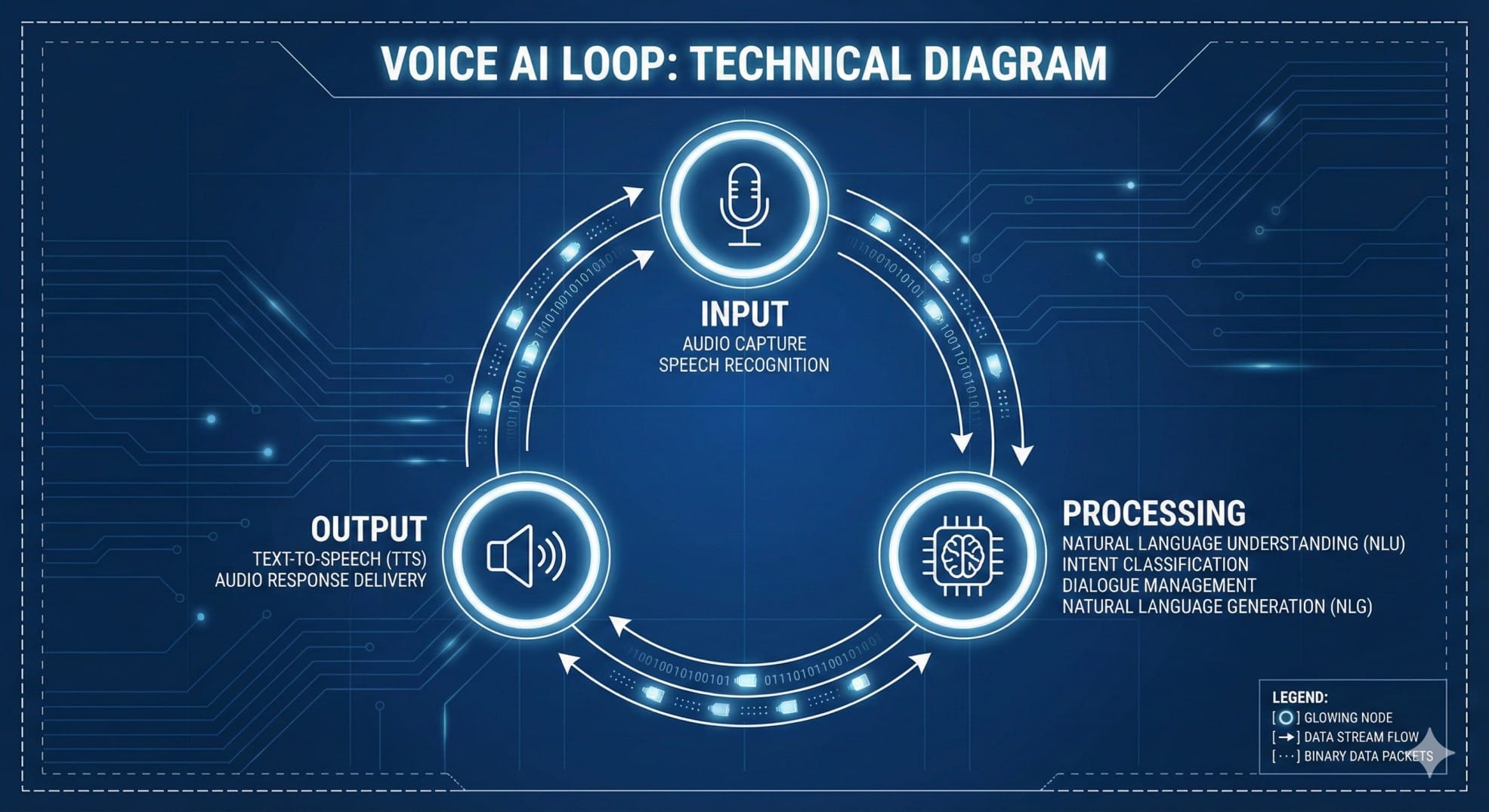
To simulate a natural human conversation, Intervo orchestrates a complex pipeline known as the Conversational Loop. This process happens in real-time, often within 800 milliseconds, to prevent "awkward silence" between turns.
1. The Ear: Automatic Speech Recognition (ASR)
The process begins when the user speaks. The raw audio stream is ingested via WebSocket or SIP (Session Initiation Protocol) and passed to the ASR Engine.
Transcoding: The audio is cleaned of background noise and echo.
Transcription: Deep learning models convert the acoustic waves into phonemes and then into text.End-of-Turn
Detection: A critical component called VAD (Voice Activity Detection) analyzes silence and intonation to determine if the user has finished speaking or is just pausing for breath. This prevents the AI from interrupting the user mid-sentence.
2. The Brain: Large Language Model (LLM) & Logic
Once the speech is converted to text, it is fed into the Intelligence Layer. This is where Intervo shines-it allows you to swap "brains" depending on the task.
Context Injection: Intervo retrieves relevant data from your CRM or Knowledge Base (via Vector Database) and injects it into the prompt. This ensures the agent knows who is calling and what their history is.
Function Calling: If a user asks to "book a demo," the LLM doesn't just talk about it; it executes a function. It triggers an API call to your calendar system to actually reserve the slot.
Reasoning: The LLM formulates a text response that is concise, conversational, and adheres to the "System Prompt" (e.g., "You are a helpful support agent").ShutterstockExplore
3. The Mouth: Neural Text-to-Speech (TTS)
The final step is converting the text response back into audio. This is not the robotic voice of the 90s.
Neural Synthesis: Intervo integrates with top-tier TTS engines (like ElevenLabs or Deepgram) to generate audio that mimics human breath, pitch, and cadence.
Streaming Output: To reduce latency, Intervo streams the audio in chunks. The user starts hearing the beginning of the sentence while the end of the sentence is still being generated.
The Open-Source Advantage vs. SaaS
In the AI telephony market, Intervo stands apart by offering a "White Box" solution compared to closed SaaS platforms.
|
Feature |
Intervo (Open Source) |
Proprietary SaaS Solutions |
|
Data Privacy |
Total Control. Host on
your own VPC. Data never leaves your perimeter. |
Low. Data resides on
third-party servers; risk of training leakage. |
|
Cost Structure |
At-Cost. You pay only
for raw usage (Twilio/LLM tokens). No markup. |
High Markup. often $0.15
- $0.30 per minute. |
|
Customization |
Unlimited. Modify the
core code, swap models, build custom UI. |
Restricted. Limited to
provided APIs and dashboard settings. |
|
Latency |
Optimizable. Tune buffer
sizes and server locations for speed. |
Fixed. Dependent on the
vendor's global routing. |
|
Vendor Lock-in |
Zero. Switch LLM or TTS
providers instantly if pricing changes. |
High. Migrating away
requires rebuilding the entire stack. |
The "Sovereign AI" Philosophy
For enterprise CIOs, the risk of sending sensitive customer voice data to a third-party black box is unacceptable. Intervo enables Sovereign AI—the ability to run a completely private voice stack. You can run open-source models (like Llama 3 or Mistral) locally for the "Brain" and Whisper for the "Ear," meaning the entire conversation happens on your hardware without ever touching the public cloud.
Key Technical Features of Intervo
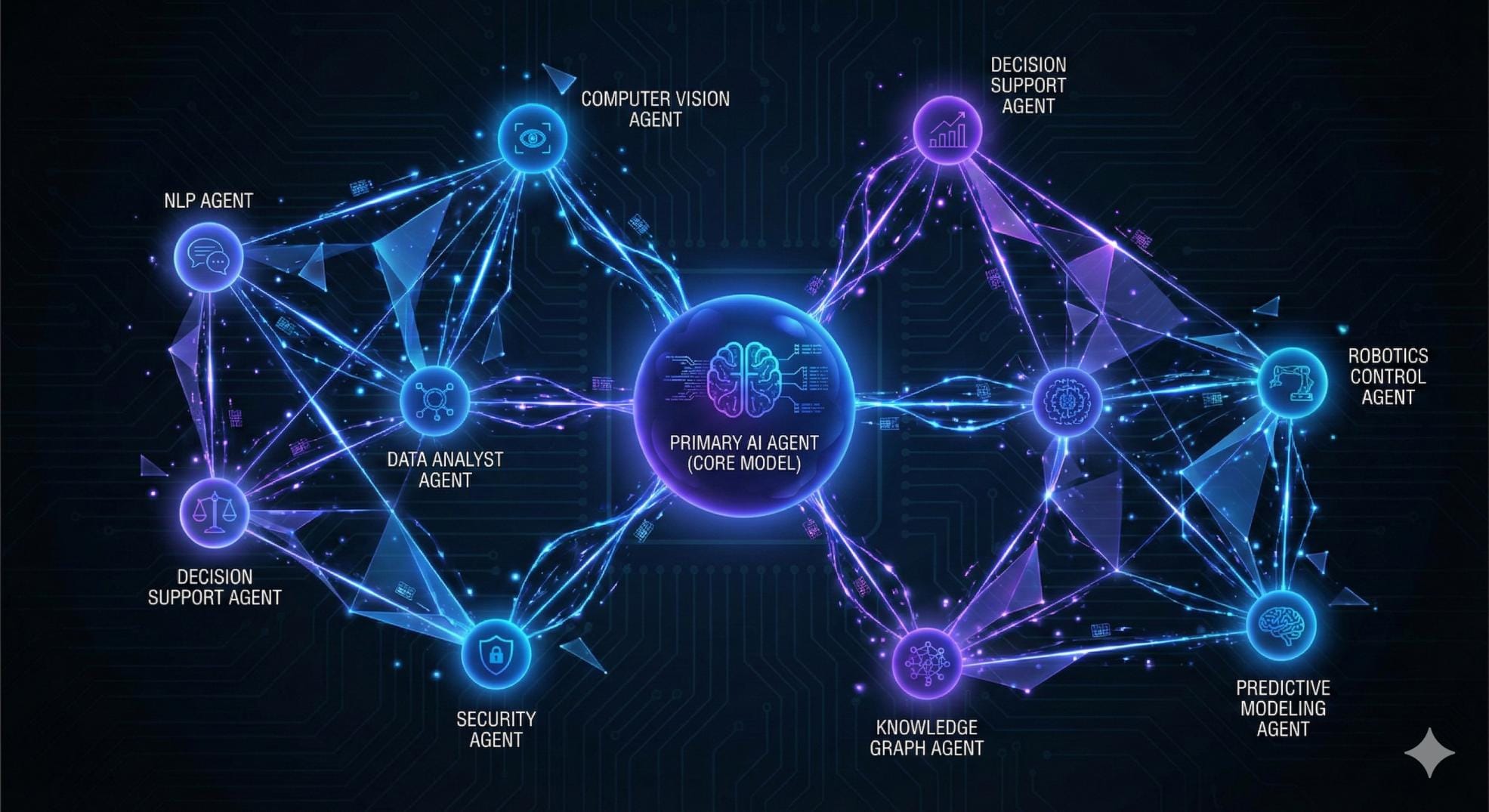
1. Multi-Modal "Sub-Agents"Complex calls cannot be handled by a single prompt. Intervo utilizes a Swarm Architecture. You can define specialized agents: a "Receptionist Agent" that routes the call, a "Technical Support Agent" that handles diagnostics, and a "Sales Agent" that closes deals. Intervo manages the "handoff" between those agents seamlessly during a single call, maintaining context throughout.
2. Real-Time RAG (Retrieval-Augmented Generation)Voice agents need facts, not hallucinations. Intervo comes with a built-in RAG pipeline. When a customer asks, "What is the status of my order #123?", the system queries your SQL database or Shopify API in real-time, retrieves the status, and feeds it to the LLM to generate an accurate answer: "Your order is currently in transit and will arrive on Tuesday."
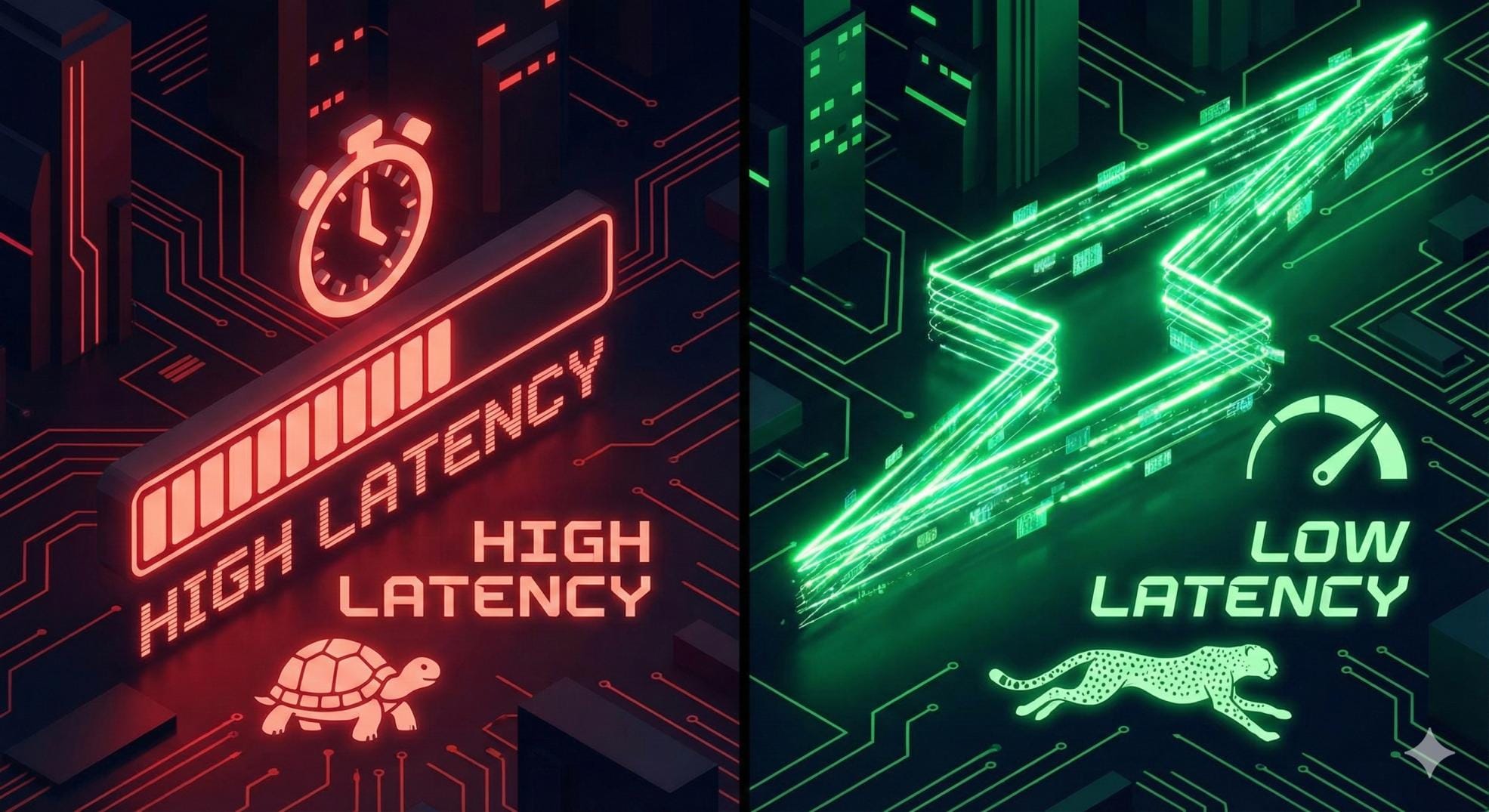
3. Latency Optimization EngineIn voice, speed is everything. A delay of 2 seconds makes the user think the call dropped. Intervo optimizes the "Time-to-First-Byte" (TTFB) by using WebSocket streams instead of REST APIs. It minimizes the "round trip" time by processing logic in parallel—predicting the user's intent before they have even finished the sentence.
Real-World Applications & Use Cases
Intervo is not just for customer support; it is an infrastructure layer for automating any voice-based workflow.
1. Healthcare: Patient Intake & TriageDoctors' offices are overwhelmed with administrative calls.
Application: An Intervo agent answers the phone, verifies the patient's insurance ID against a database, asks about symptoms, and books an appointment slot in the EMR (Electronic Medical Record) system.
Impact: Reduces front-desk burnout and ensures patients can book appointments 24/7.
2. Logistics: Driver Dispatch & UpdatesTrucking companies need to communicate with hundreds of drivers simultaneously.
Application: Instead of a dispatcher calling 50 drivers, an Intervo agent creates outbound calls to drivers to confirm delivery windows. Drivers can speak naturally: "I'm stuck in traffic, running 20 mins late." The AI parses this and updates the central dashboard automatically.
Impact: Real-time fleet visibility without manual data entry.
3. High-Velocity Sales Qualification: Sales teams waste hours calling "cold" leads who aren't interested.
Application: Intervo agents conduct the initial outreach. They engage the lead, qualify their budget and timeline, and only transfer the call to a human closer if the lead shows high intent.
Impact: Human sales reps spend 100% of their time talking to qualified buyers, drastically increasing close rates.
The Future of Voice AI (2025 Roadmap)
1. E2E (End-to-End) Audio ModelsCurrently, most systems use the "Cascade" method (Audio -> Text -> Audio). The future is Native Audio Models (like GPT-4o's native audio capabilities). Intervo is architected to support these next-gen models, where the AI processes raw audio directly, allowing it to understand laughter, sarcasm, and emotional tone without needing a text transcription.
2. Paralinguistic SignalingFuture Intervo agents will not just speak words; they will use "backchanneling." They will say "Uh-huh," "I see," or "Go on" while the user is speaking, just like a human listener does. This active listening creates a psychological bond and makes the user feel truly heard.
3. Biometric Security LayerVoice interactions will become a primary method of authentication. Intervo is developing modules for Voice Biometrics, allowing the agent to authenticate a user based on their unique voiceprint ("My voice is my password") before discussing sensitive account details.
Glossary of Terms
SIP Trunking: The digital method of transmitting voice calls over the internet. Intervo connects to SIP providers to make the AI agent accessible via a standard phone number.
Barge-In: The ability for a user to interrupt the AI while it is speaking. A sophisticated VAD system is required to stop the AI's audio stream instantly when the user starts talking.
Hallucination: When an AI invents facts. Intervo mitigates this via RAG (retrieving facts from a database) and "Temperature" settings (restricting the creativity of the model).
Telephony Gateway: The bridge between the Public Switched Telephone Network (PSTN) and the internet-based AI.
WebRTC: A technology that enables voice conversations directly inside a web browser, allowing Intervo agents to live on websites as "Talk" buttons without needing a phone call.
Conclusion
Intervo.ai represents the democratization of Conversational AI. By providing a modular, open-source infrastructure, it enables developers to implement voice interfaces that are not "chatbots with a mouth" but rather smart, empathetic, and highly integrated digital employees. Be it automating a dental clinic or creating the next generation of customer service for a Fortune 500, Intervo provides the primitives to build it securely, privately, and at scale.
Ready to speak to the future? Deploy your first agent on Intervo.ai.